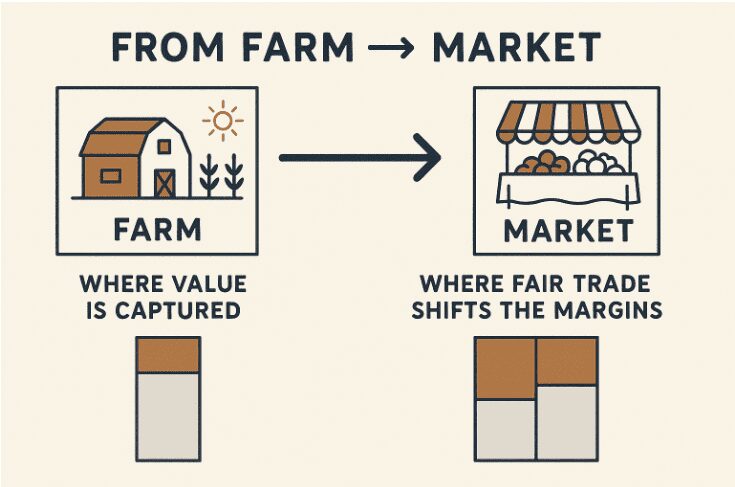
In today’s global economy, the choices we make as consumers have ripple effects far beyond our wallets. Every product has a story who made it, under what conditions, and who benefits from the sale. Too often, producers in developing countries carry the most risk but receive the least reward. Fair trade seeks to change that by creating systems that are more equitable, sustainable, and humane. At its core, fair trade ensures farmers and workers receive fair prices for their labor, enjoy safe conditions, and sometimes participate in cooperatives that give them ownership and a stronger voice. It also emphasizes environmental responsibility and community development, often directing profits back into schools, clinics, or local infrastructure.
Real-world examples show how this works in practice. In South America, coffee farmers who join fair trade cooperatives gain collective bargaining power, negotiate better prices, and reinvest earnings in education and healthcare—breaking cycles of exploitation. In fashion, fair trade offers an ethical counter to fast fashion’s low prices built on exploited labor and environmental harm, emphasizing transparency, fair wages, and sustainable materials. Even on college campuses, students pushing for ethically sourced coffee are influencing institutions and vendors to rethink supply chains. These actions, small as they may seem, prove how collective demand can shift entire markets.
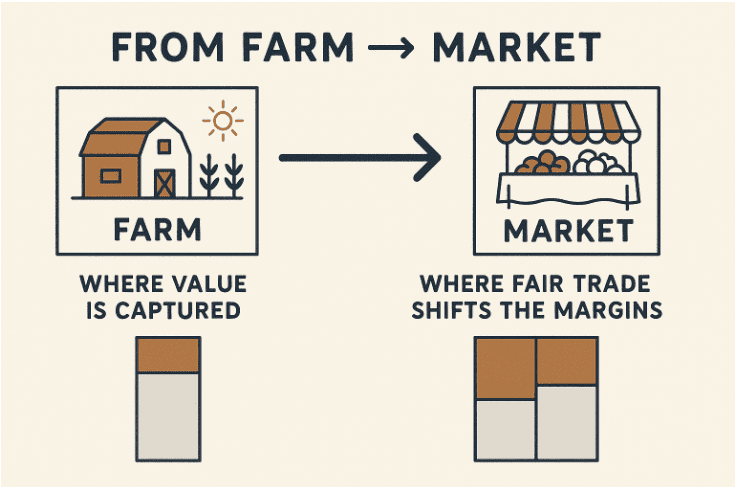
Fair trade is more than a feel-good label; it addresses deep systemic issues. It helps rebalance power in global trade, encourages better environmental practices, and pressures companies to act more ethically when consumers demand accountability. Of course, it is not without challenges—certification can be costly for small producers, demand remains limited compared to mainstream supply chains, and greenwashing sometimes confuses consumers.
Still, the impact is clear: when workers are treated fairly and communities have resources to grow, the benefits spread far beyond individual farms or factories.
Supporting fair trade doesn’t require grand gestures. It starts with everyday choices: buying certified products like coffee, chocolate, or clothing, asking questions about sourcing, and choosing brands that are transparent about their practices. Spreading awareness—whether through conversation, writing, or sharing—helps build momentum. Fair trade may not solve every problem, but it represents a powerful step toward a more just and sustainable global economy, reminding us that what we buy can help shape a better future.
Written by Jayln Evans